Equitable STEM Access for First-Gen Students
Crunch Club officially launched as a collaboration between Bridge for All, Breakthrough Silicon Valley, and Mark Rober’s Crunch Labs. The program was designed to give first-generation middle school students hands-on access to STEM learning — physics and AI specifically — through state-of-the-art kits, peer mentorship, and accessible instruction.
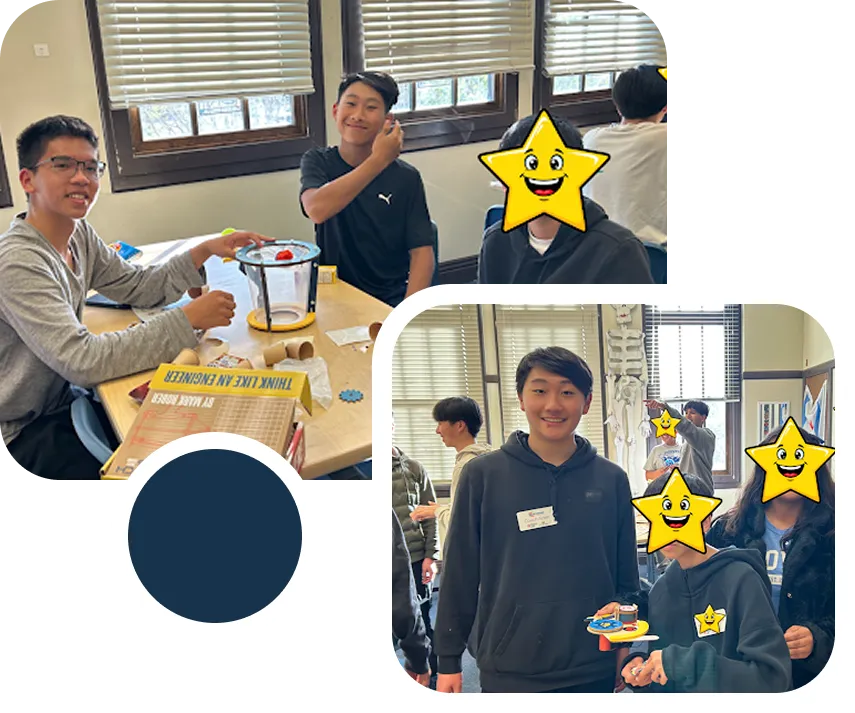
Awesome first-gen STEM enthusiasts dive into weeks of engineering challenges with their mentors at Crunch Club!
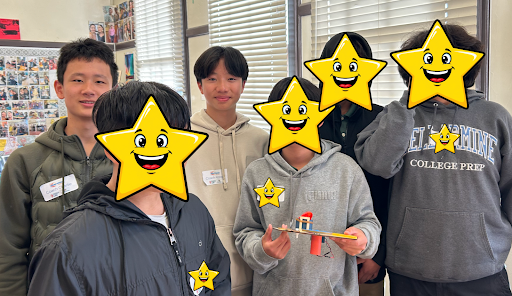
Integrating Crunch Club physics, MIT-AI, and Stanford-AI, students are challenged with hands-on STEM learning through laughter and teamwork.
“I enjoyed collaborating with the coaches and my friends. Crunch Club has been growing my interest in engineering. Thanks!” — 6 out of 6: “I would recommend this to a friend!”
— Nicolle, first-gen Breakthrough student
How Crunch Club All Began
While toy testing at Mark Rober’s Crunch Labs, I felt like a million bucks. I shared my love for physics with the product development team, tested new inventions, and got to be featured in a cool Hack Pack launch video. It was thrilling. But something resonated with me
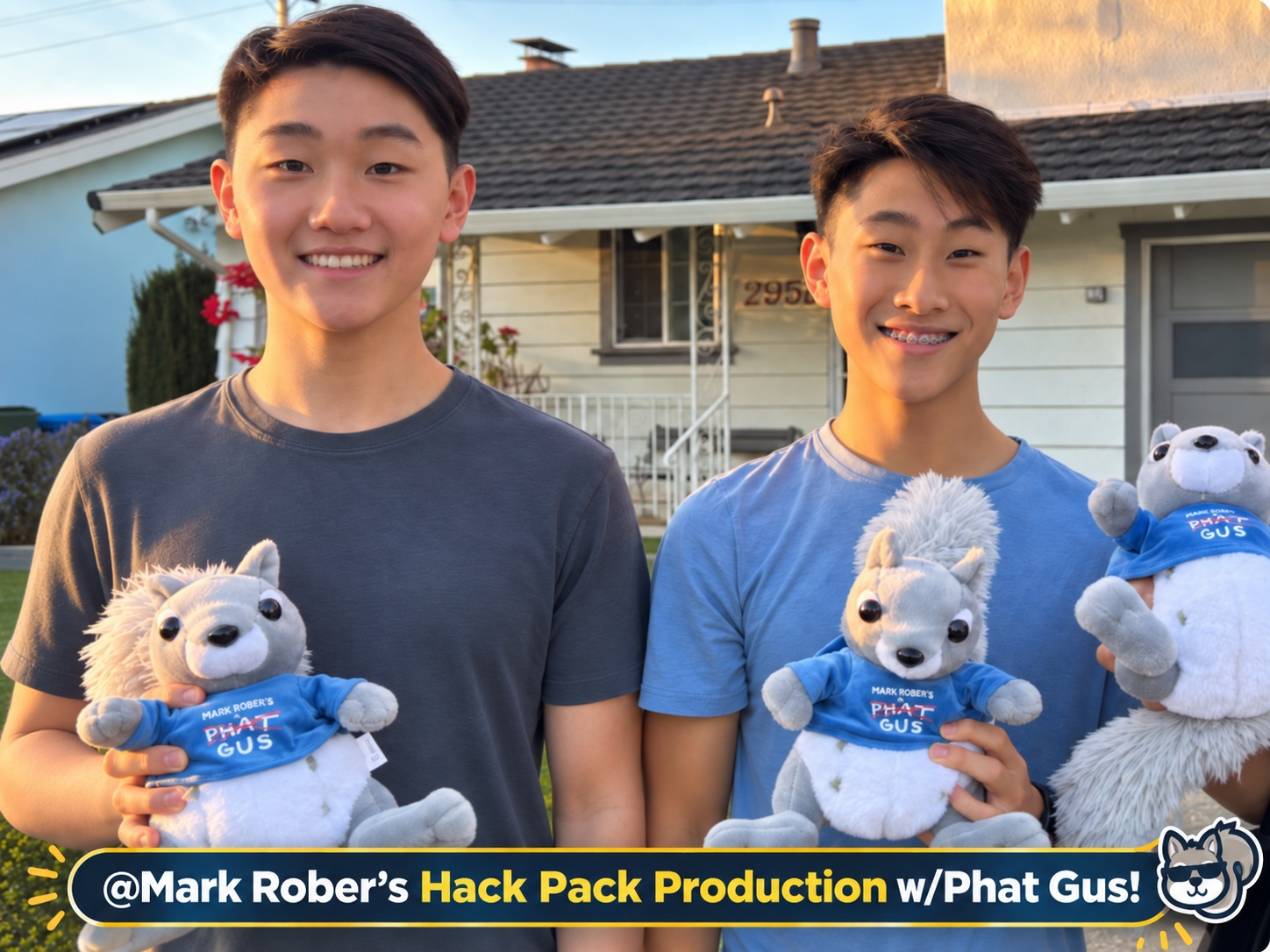
Image from Mark Rober Productions for Crunch Labs’ Hack Pack.
At Breakthrough Silicon Valley, I’ve loved serving as a STEM facilitator, where students come from first-generation backgrounds and Title I schools. While I had just experienced the privilege of using state-of-the-art kits, my STEM students usually worked with more humble resources. While they can build magic no matter what, I also knew they’d equally love building these cool and creative projects as likeminded STEM enthusiasts.
I deeply admire Breakthrough Silicon Valley’s mission, which helps students “unleash potential” by “elevating communities.” Why not elevate their STEM learning with Mark Rober’s Crunch Labs physics merged with MIT and Stanford’s AI curriculum, plus our birds-eye perspective as Bridge for All near-peer mentors? That’s how the Crunch Club dream collab was launched.
Bridge for All: Our Story
Two of my friends — Samuel and Vedant — and I co-founded Bridge for All, a nonprofit devoted to building equitable pathways to opportunity. Our leadership reflects our strengths: my co-founders often lead our speech, business, marketing, and humanities outreach, while I often spearhead STEM initiatives, and we all collectively focus on empowerment, innovation, mentorship, and access.
To date, Bridge for All has hosted 40+ free programs and reached more than 1,100 students across 100+ locations. One of our proudest achievements yet is the creation of Crunch Club.
What Crunch Club Is
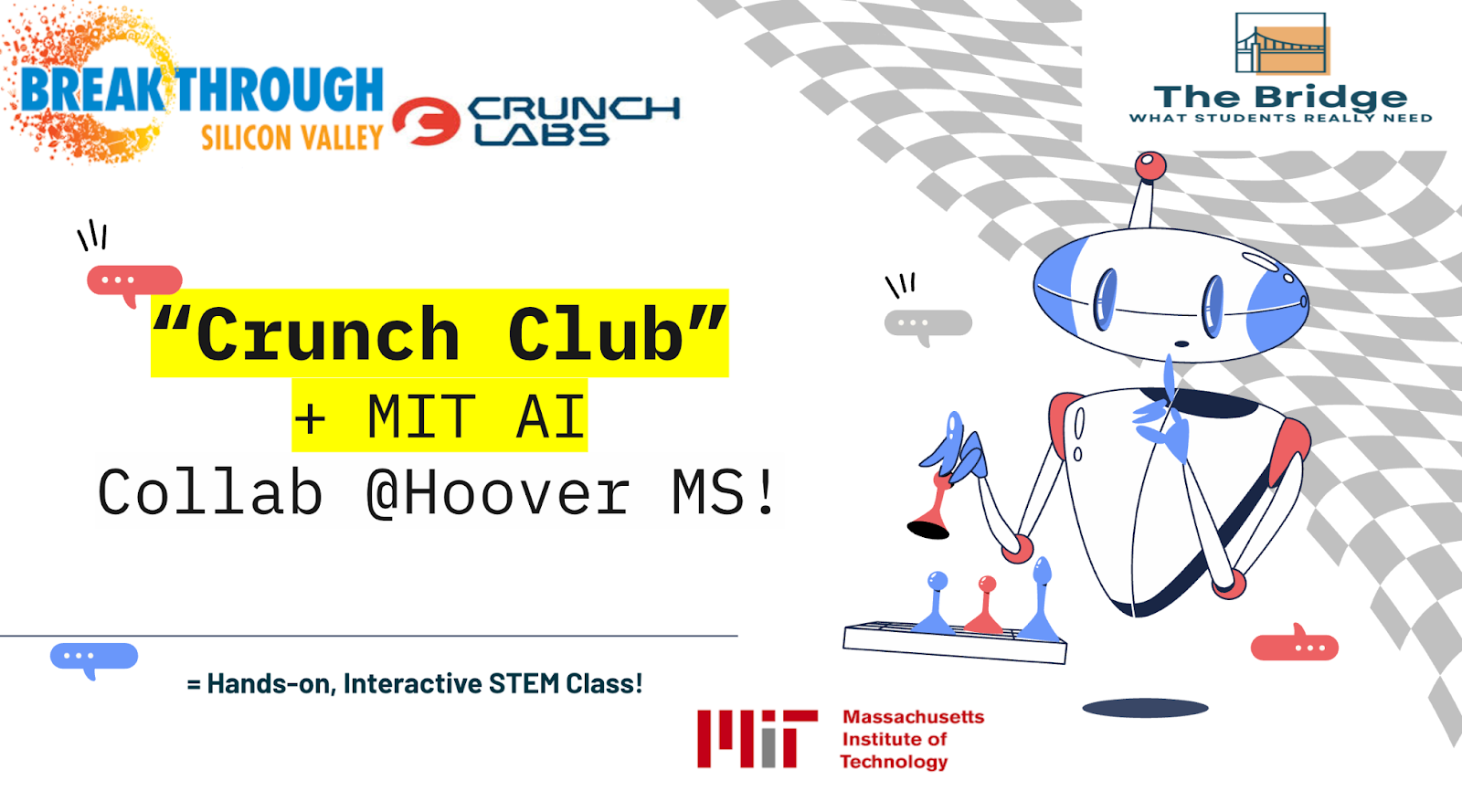
Crunch Club is a first-of-its-kind partnership between Bridge for All, Mark Rober’s Crunch Labs, and Breakthrough Silicon Valley, built to ignite curiosity, collaboration, and confidence in first-generation students.
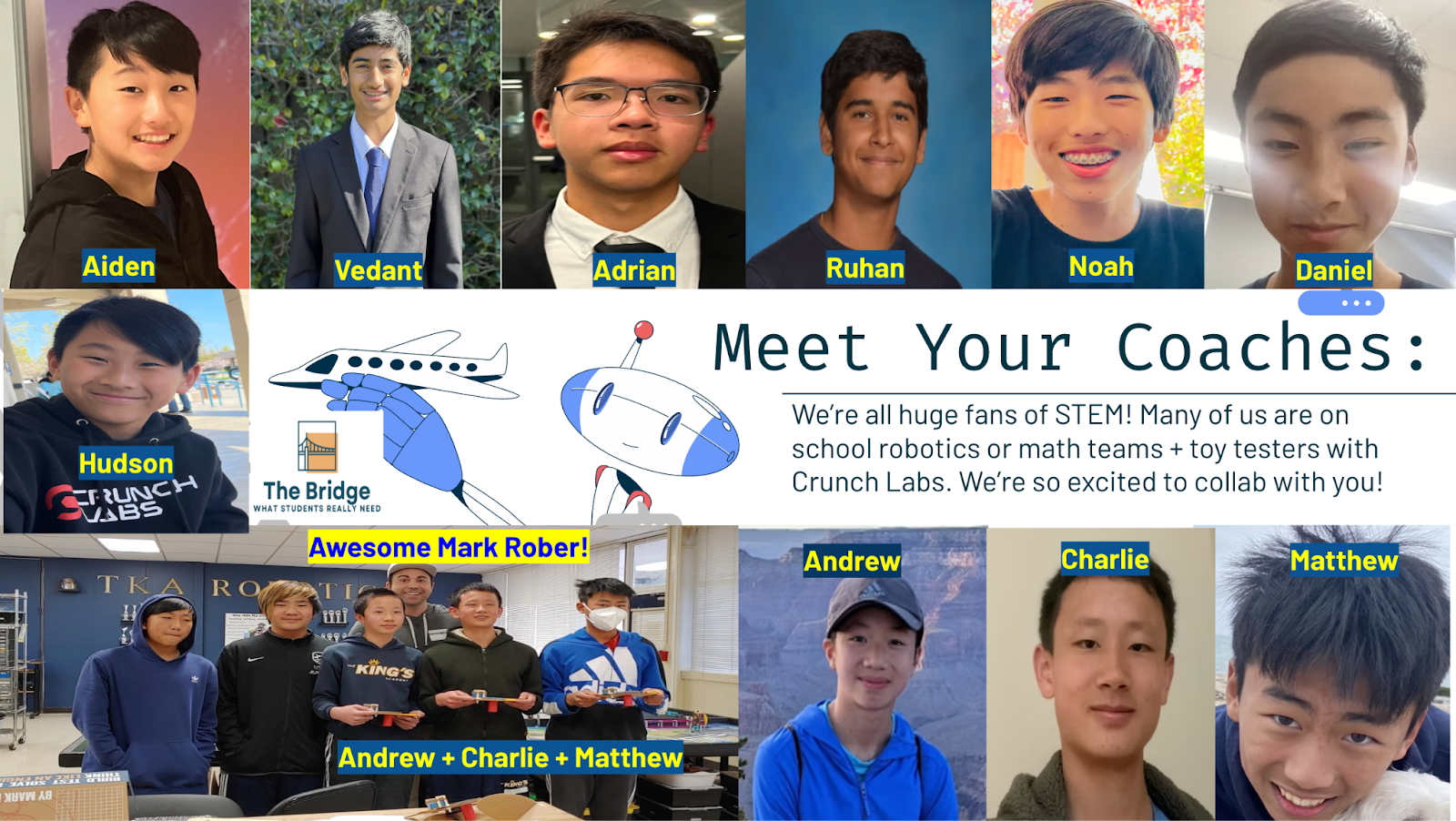
We fundraised to launch our pilot at Hoover Middle School, bringing together 7th and 8th grade Breakthrough Silicon Valley students from across multiple schools. With the mentorship of Mr. Sergio Quiñones from Breakthrough Silicon Valley, and Mark Rober’s team graciously blessing our Crunch Club namesake, we recruited a passionate team of 10 youth teachers, including:
- Robotics leaders from TKA, some of whom have personally met Mark Rober
- Mentors from Bellarmine’s five-time World Champion FRC robotics team, bringing elite engineering experience to the table
Futuristic Learning That Feels Like Play
Crunch Club combines Crunch Labs’ hands-on physics kits with futuristic nuggets from the MIT and Stanford AI curriculum, giving students the chance to explore both tangible engineering and cutting-edge AI concepts.
From building gear-driven machines to learning about deepfakes through a hilarious “Baby Elon Musk” video, we make science real and relevant. Our student-friendly slides simplify big ideas, while our student coaches bring the mentorship and the fun.
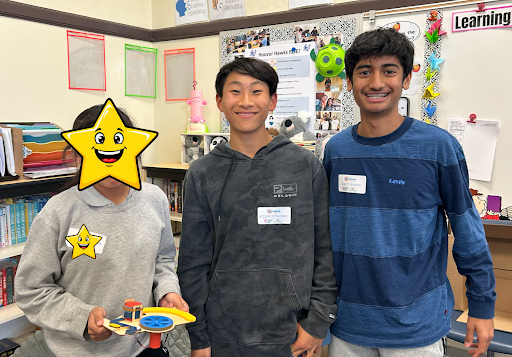
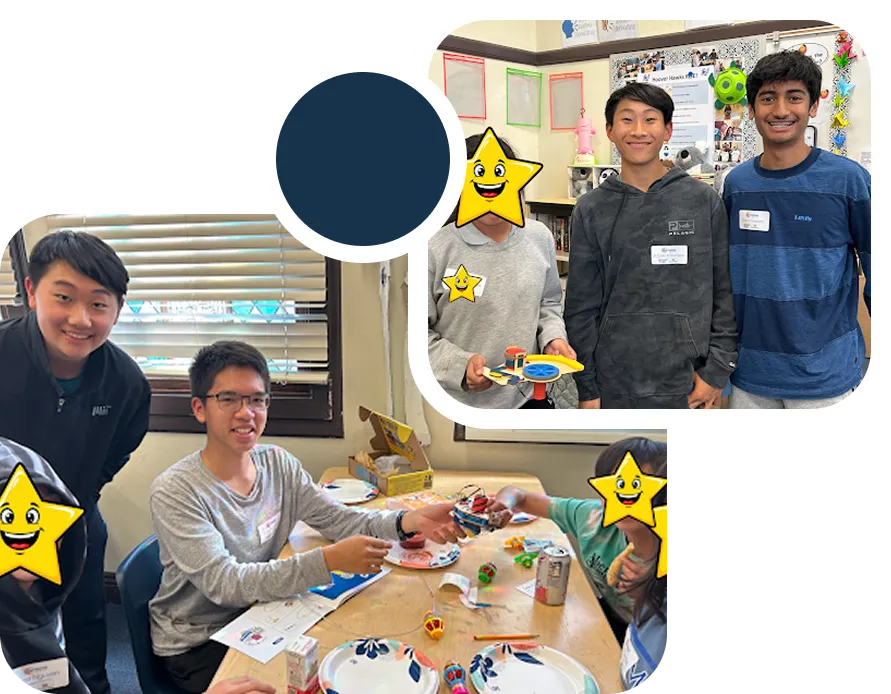
Bridge for All team, coaches, and Breakthrough students — united by curiosity and compassion.
Want more stories like this?
Every Bridge program is free, taught by volunteers, and funded by people who believe a student’s zip code shouldn’t set the ceiling.